What Is a Hazardous Materials Survey?
Before any renovation, demolition, or building upgrade, one of the most important safety steps is conducting a Hazardous Materials Survey (HazMat Survey). Many older homes and commercial buildings contain materials that can pose serious health risks if disturbed, including asbestos, lead, mould, silica, PCBs, and more.
A proper survey ensures the safety of workers, occupants, and the surrounding environment — and is required by most safety regulations and building authorities.
This guide explains what a hazardous materials survey is, why it’s necessary, what it includes, and how the process works.
What Is a Hazardous Materials Survey?
A Hazardous Materials Survey is a detailed inspection of a building to identify any materials that could pose health or environmental risks when disturbed during renovation or demolition.
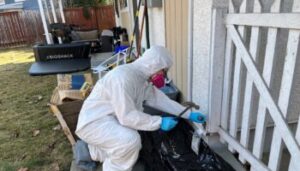
These surveys are performed by trained and certified professionals and follow strict safety and sampling protocols.
A HazMat Survey typically screens for:
- Asbestos-containing materials (ACMs)
- Lead-based paint
- Mould
- Silica-containing materials
- Mercury
- PCBs (polychlorinated biphenyls)
- Ozone-depleting substances (ODS)
- Other regulated hazardous building materials
The purpose is to locate, sample, test, and document all hazardous materials so they can be safely removed or managed.
Why Hazardous Materials Surveys Are Important
1. Protects Workers and Occupants
Disturbing hazardous materials without proper precautions can lead to:
- Respiratory problems
- Heavy metal poisoning
- Skin and eye irritation
- Long-term diseases (asbestosis, mesothelioma, neurological damage, etc.)
A survey prevents accidental exposure.
2. Required by Law Before Renovation or Demolition
In regions like BC, Ontario, California, and many others, hazardous materials surveys are mandatory before any construction activity that might disturb building materials.
Without a survey, you may face:
- Regulatory fines
- Work stoppages
- Legal liability
- Insurance issues
3. Prevents Project Delays and Unexpected Costs
Hidden hazardous materials can shut down a job site if discovered late.
A survey helps:
- Accurately plan the project
- Identify abatement needs
- Budget for removal
- Avoid costly surprises
4. Ensures Safe and Compliant Removal
Survey findings determine what must be:
- Removed
- Abated
- Sealed
- Monitored
- Disposed of according to regulations
This keeps the project safe and fully compliant.
What’s Included in a Hazardous Materials Survey?
A complete HazMat survey typically includes:
1. Building Walkthrough & Visual Inspection
Inspectors examine the property and identify all materials suspected to be hazardous.
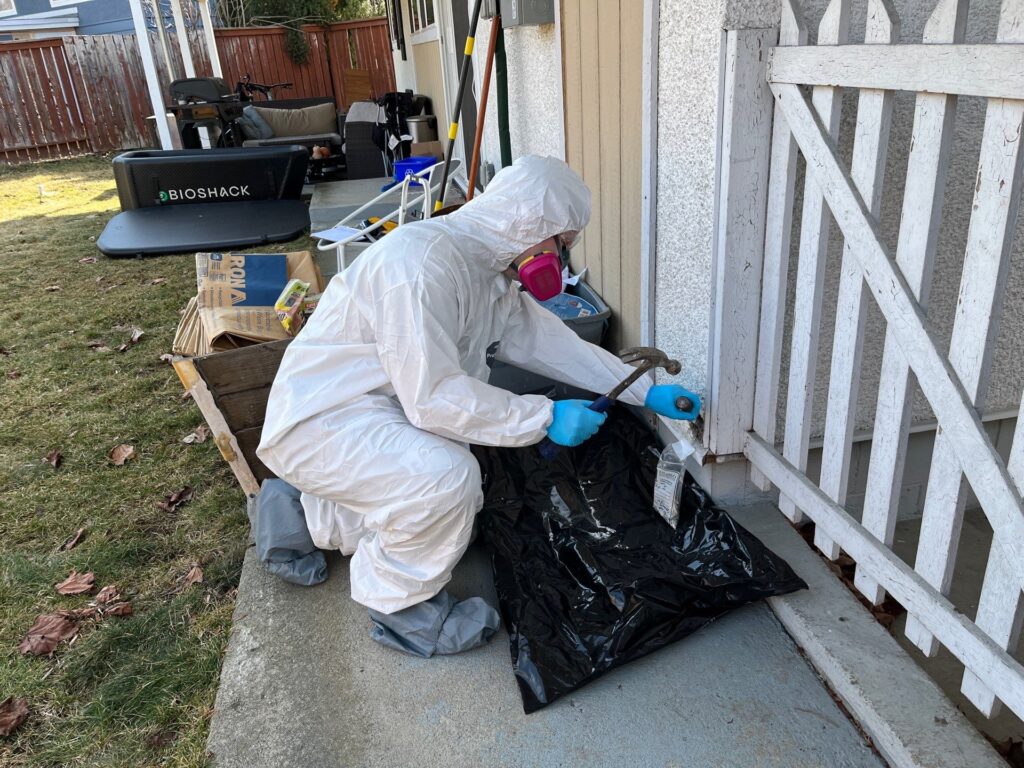
2. Sampling of Suspected Materials
Certified professionals take controlled samples of:
- Drywall
- Flooring
- Insulation
- Ceiling texture
- Roofing materials
- Caulking, paint, mastics
- HVAC insulation
- Concrete or plaster (for silica)
Each sample is carefully collected to avoid fiber or dust release.
3. Laboratory Analysis
All samples are tested in an accredited laboratory to confirm:
- Type of hazard
- Concentration
- Location and extent
- Specific hazard classification
4. Air Sampling (When Required)
Air samples may be collected if:
- Mould is suspected
- Asbestos fibers may be airborne
- Post-abatement clearance is required
5. Hazardous Materials Inventory Report
A full report is provided that includes:
- All identified hazardous materials
- Photos and locations
- Laboratory results
- Risk assessment
- Recommended removal or management procedures
This report is required before any abatement or demolition begins.
Types of Hazardous Materials Commonly Found in Buildings
1. Asbestos
Found in drywall compound, flooring tiles, insulation, textured ceilings, roofing materials, and more.
2. Lead Paint
Common in buildings built before 1990; toxic when scraped, sanded, or heated.
3. Mould
Occurs in damp, poorly ventilated, or previously flooded areas.
4. Silica
Present in concrete, tile, mortar, brick, and other masonry materials.
5. PCBs
Found in older fluorescent light ballasts and electrical equipment.
6. Mercury
Often found in thermostats, switches, and some older lighting systems.
7. Ozone-Depleting Substances (ODS)
Located in older HVAC and refrigeration units.
When Do You Need a Hazardous Materials Survey?
You need a HazMat Survey if you are planning:
- Renovation
- Demolition
- Building upgrades
- Restoration after water/fire damage
- Property purchase inspections
- Commercial building compliance checks
If the building was constructed before 1990, a survey is almost always required.
How the Survey Process Works
Step 1: Initial Consultation
Discuss the project scope, building age, and areas of concern.
Step 2: On-Site Inspection
Inspectors identify areas and materials needing sampling.
Step 3: Sample Collection
Small samples are safely removed and sealed for lab testing.
Step 4: Laboratory Testing
Accredited labs analyze the samples for hazardous components.
Step 5: Final Report
You receive a complete Hazardous Materials Survey report with:
- Results
- Photos
- Recommendations
- Abatement requirements
Conclusion
A Hazardous Materials Survey is a crucial step in any construction or demolition project. It protects workers, ensures legal compliance, prevents health risks, and avoids costly delays. Whether you’re a homeowner, contractor, or developer, investing in a professional HazMat survey is the smartest way to begin any building project safely and responsibly.
The Importance of Asbestos Testing: What Homeowners and Contractors Need to Know
Testing for Mould in Homes: Why It Matters and How It Works
What Is a Hazardous Materials Survey?